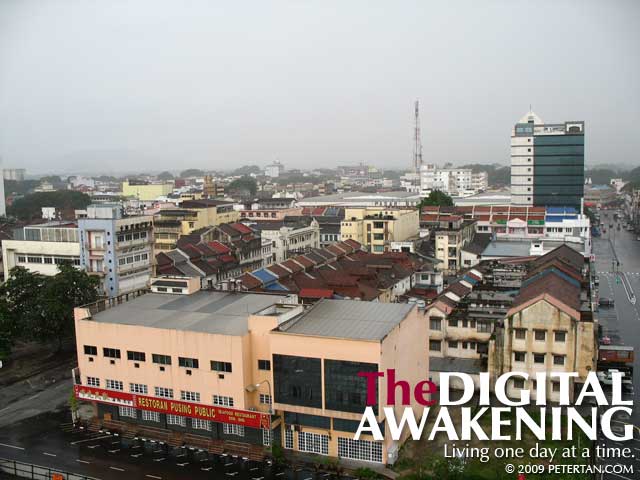
Pasar Tani Mega Kampung Simee In Ipoh – Part 3/3

Pasar Tani Kg. Simee
December 19, 2009
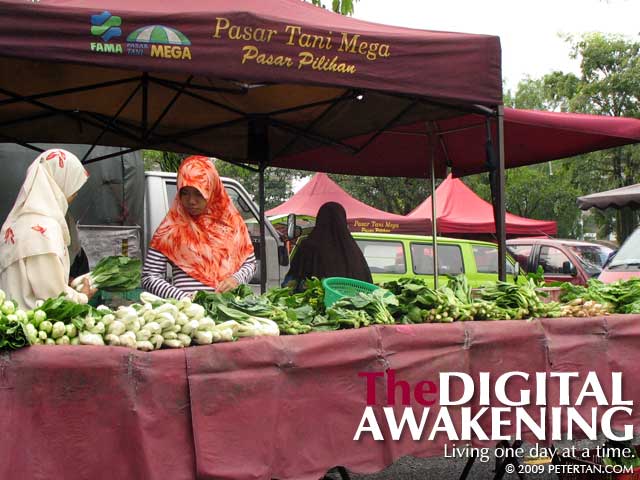
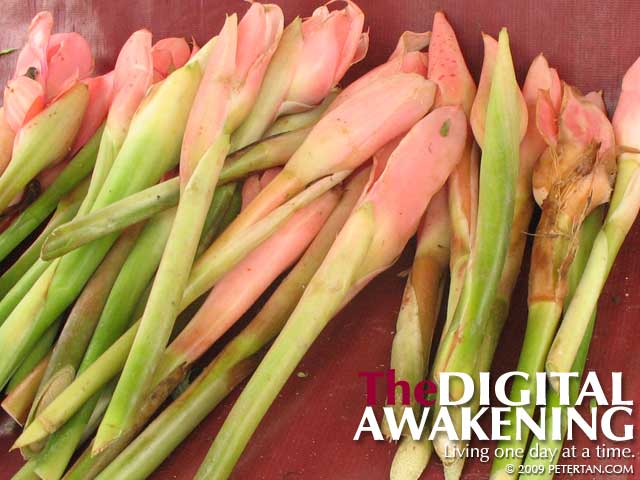
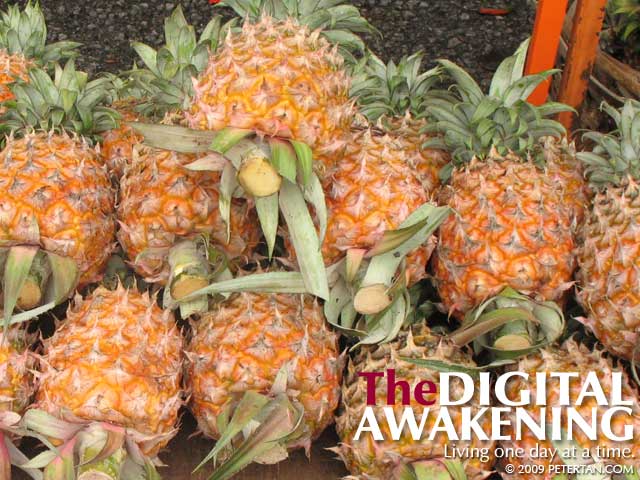
The stalls selling vegetables at the pasar tani was another interesting and colourful sight. There were green from the vegetables, orange from ripe pineapples, purple from jantung pisang and pink from the bunga kantan, among others. I had expected to see more varieties of ulam. I guess the rainy season must have deterred the harvesting as less people were expected to visit the pasar tani.
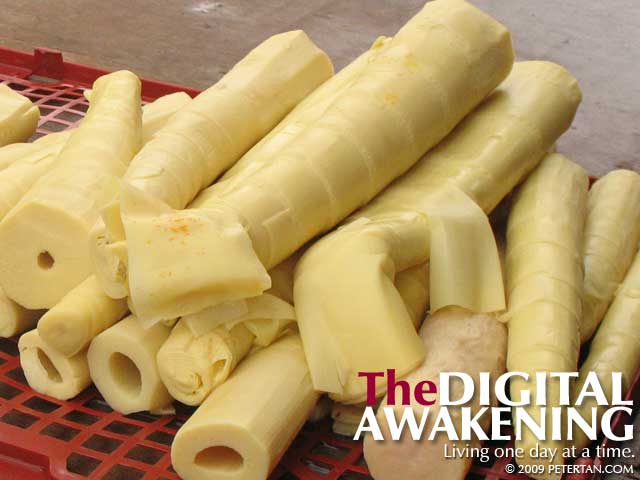
I was salivating again when I saw the tender bamboo shoots called rebung on display at one of the stalls. It has been a while since I last had bamboo shoot dishes. I like it sliced and cooked in coconut milk curry with prawns. However, the Chinese believe that it will cause a lot of “wind” in the body and should be eaten in moderation, or better still, not at all.
After all that shooting and salivating, I was beginning to get tired and decided to call it a day at the pasar tani. I did not want to wear myself out too much as we had to check out from the hotel, have lunch with the in-laws in Ipoh and drive up to Penang right after that. We wanted to reach the island before dark.

Bamboo shoots – rebung.

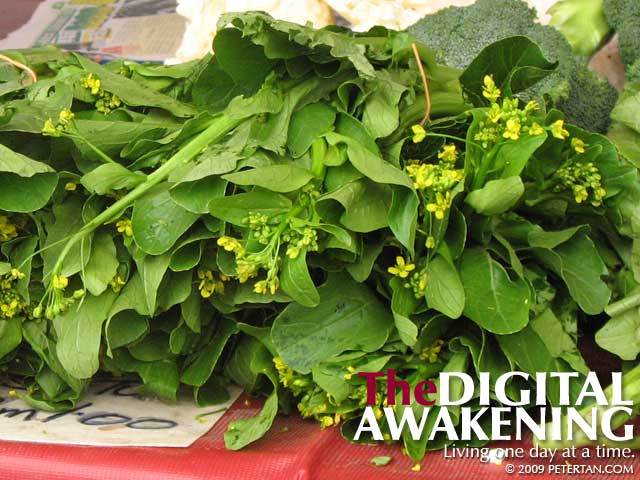
Flowering Chinese cabbage – kobis Cina – choy sum.

Torch ginger flower – bunga kantan

Pineapples – nenas.

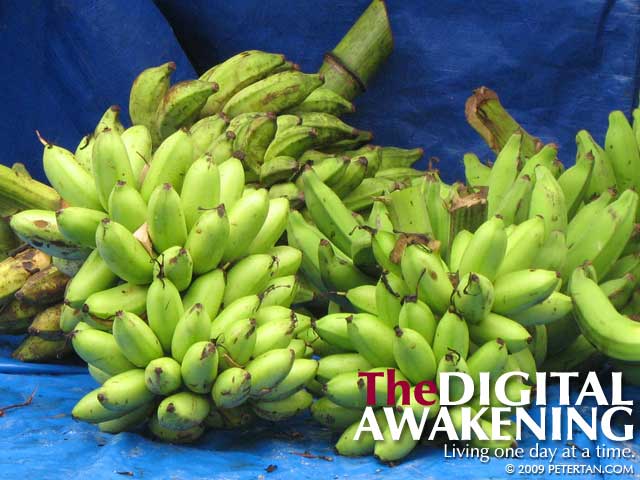
Bananas – pisang.
Tags: bamboo shoots, banana, bunga kantan, chai sim, choy sum, Flowering Chinese cabbage, kobis Cina, nenas, Pasar Tani Ipoh, Pasar Tani Kg Simee, Pasar Tani Mega, pineapple, pisang, rebung, Torch ginger flower
Pasar Tani Mega Kampung Simee In Ipoh – Part 2/3
December 19, 2009
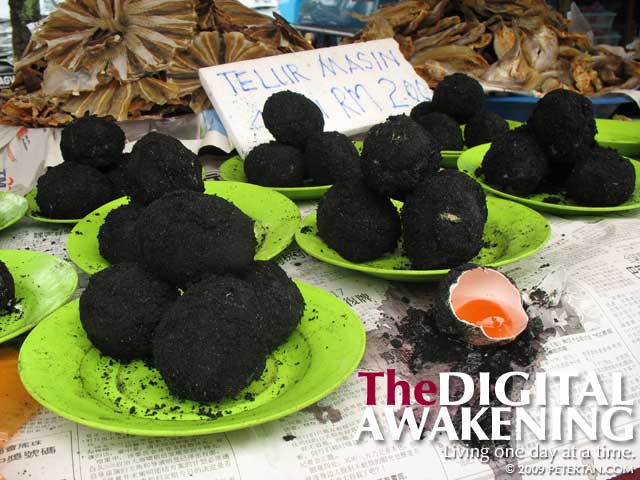
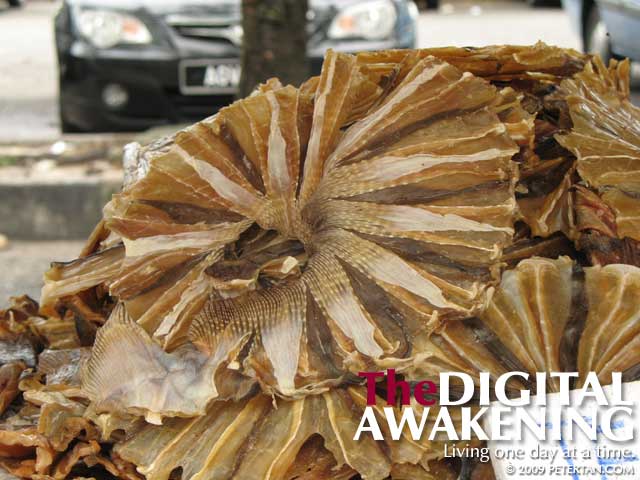
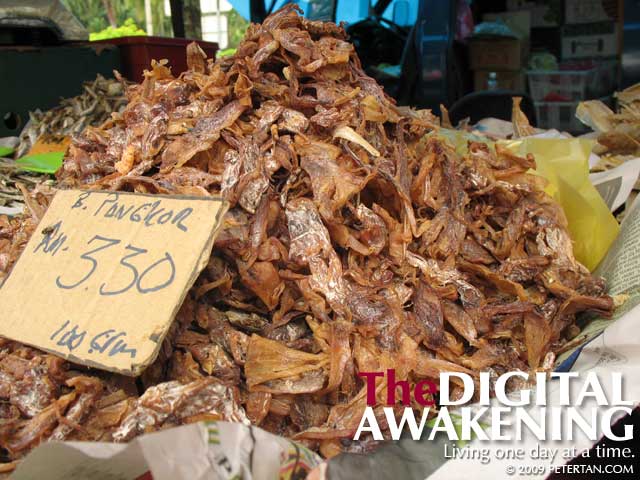
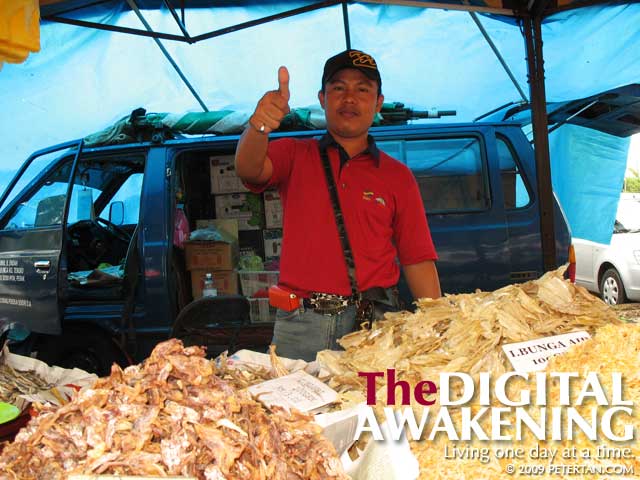
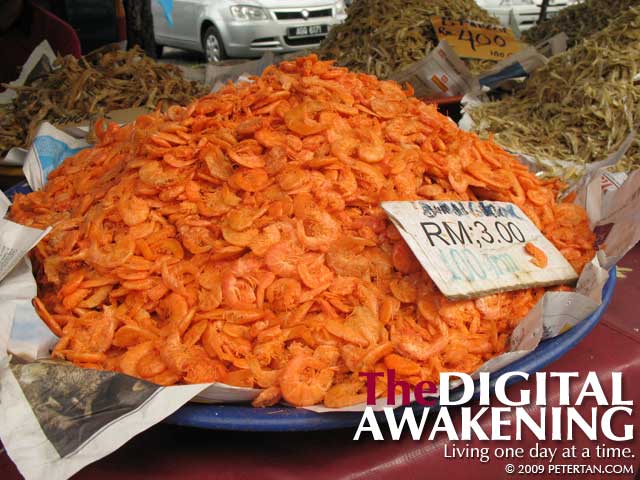
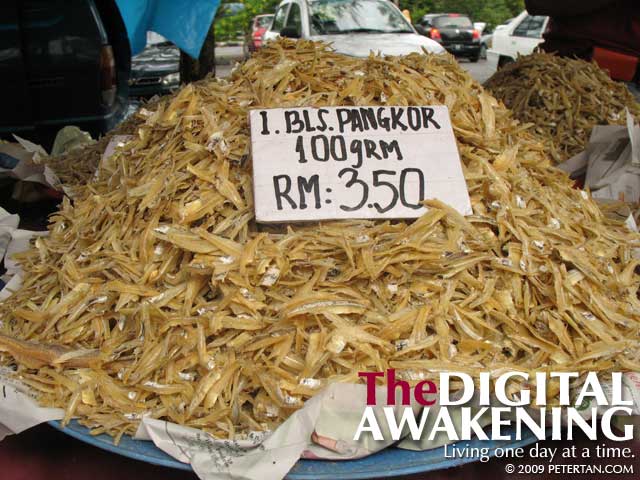
After we have photographed to our hearts’ content the plants at the nursery stalls, we hopped over to where a strong stench emanated from. The two guys manning the stall were very friendly. When they saw us with our cameras, they encouraged us to take photos of their goods. They were selling a variety of salted fishes, dried anchovies, dried prawns, dried cuttlefishes and salted duck eggs.
I had wanted to get some heh bee (dried prawns) and ikan bilis halus (dried baby anchovies). The heh bee is for cooking dried prawns porridge. The dried baby anchovies I would steam with ginger and garlic in oil and eat with rice. The stall did not have what I wanted. I ended up taking only photographs, enjoying the pungence of the salted fishes and silently salivating over the dishes I could cook with the salted fishes available.

Salted duck eggs – telur itik masin.

Salted fish – ikan masin.

Dried cuttlefish – sotong kering.

Friendly salted fish stall keeper.

Dried prawns – heh bee – udang kering.

Pulau Pangkor dried anchovies – ikan bilis kasar Pangkor.
Tags: dried baby anchovies, dried cuttlefish, dried prawns, heh bee, ikan bilis halus, ikan bilis kasar Pangkor, ikan masin, Ipoh City Stadium, Pasar Tani Ipoh, Pasar Tani Kg Simee, Pasar Tani Mega, salted duck egg, salted fish, sotong kering, telur itik masin, udang kering
Pasar Tani Mega Kampung Simee In Ipoh – Part 1/3

Wet wet Ipoh.
December 19, 2009
We woke up to a wet morning on our second day in Ipoh. It had been raining since the night before. From the hotel room window, we could see people carrying umbrellas and motorcyclists in raincoats. The roads were wet. We thought that would put paid to our plan to go to the pasar tani (farmers market) just outside the Ipoh City Stadium. Fortunately, the rain turned into a drizzle and then it miraculously subsided!
We went to pick up mum-in-law before heading to the pasar tani. There was ample parking beside the market. We did not have any problem looking for one. Our first stop was the nursery stalls. There were two. They had an interesting selection of plants from lawn grass to herbs and fruit trees to ornamental plants. Wuan bought a grafted sapling of ylang ylang, known as kenanga in Malay, for RM12. Its flowers looked rather unusual and they exuded a pleasant fragrance.
One of the stalls displayed a crafted Chinese Witch Hazel plant that was in full bloom. The red leaves and pink flowers made it look almost unreal. The other stall had a climbing shrub with flowers that gave off a fragrance like that of pandan leaves. The stall owner told us that the plant is called Kerak Nasi or Kesidang. We put our nose close to the flowers and true enough, it had a faint smell of pandan.
I was very tempted to get a cempaka sapling. Both stalls only had those with white flowers. I prefer the orange variety. Its colour is similar to that of the saffron robes of Buddhist monks. There is limited space in our garden and knowing how big a mature cempaka tree can be, the idea had to be shelved for now. The cempaka flowers have a sweet fragrance. They always reminded me of my childhood in Ayer Itam. Our neighbour had a very tall cempaka tree. The only way to pluck the flowers were with a very long bamboo pole.
The one thing I like about the plants at pasar tani is that many of them are difficult to get elsewhere, for example the cashew nut tree, various species of bananas and local herbs. In fact, many urbanites may not have seen these plants before although they are very common in the kampungs. In a way, the pasar tani allows me to reconnect with the kampung boy in me now that I seldom get the opportunity to visit such places anymore.
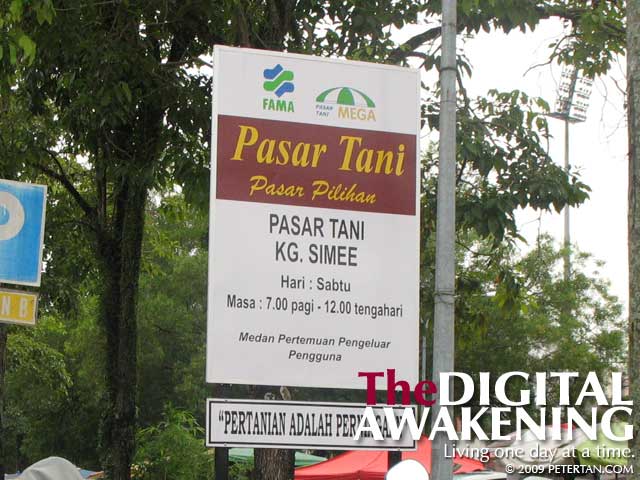
Pasar Tani Kg. Simee.
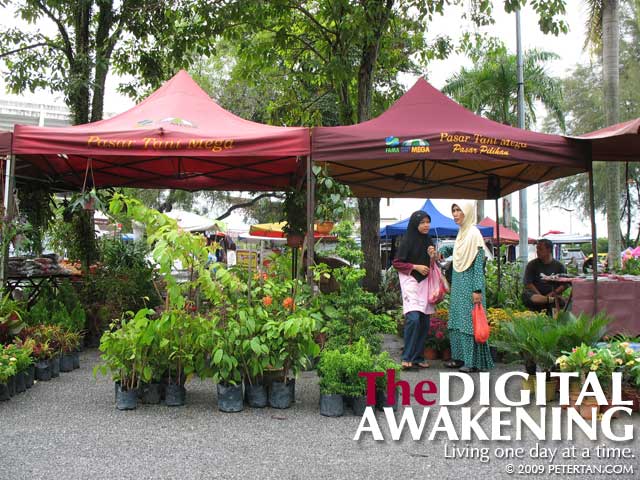
Nursery stalls at Pasar Tani Kg. Simee.
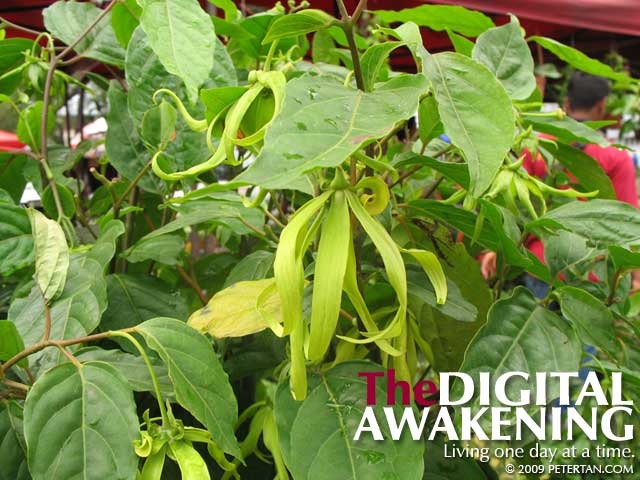
Ylang ylang – Kenanga – Cananga odorata.
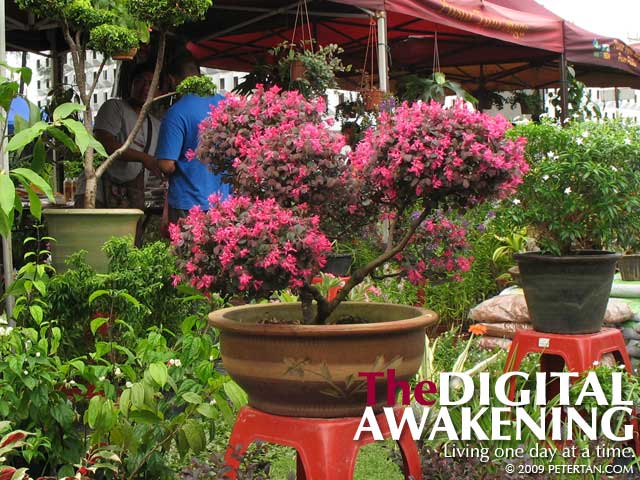
Chinese witch hazel in full bloom.
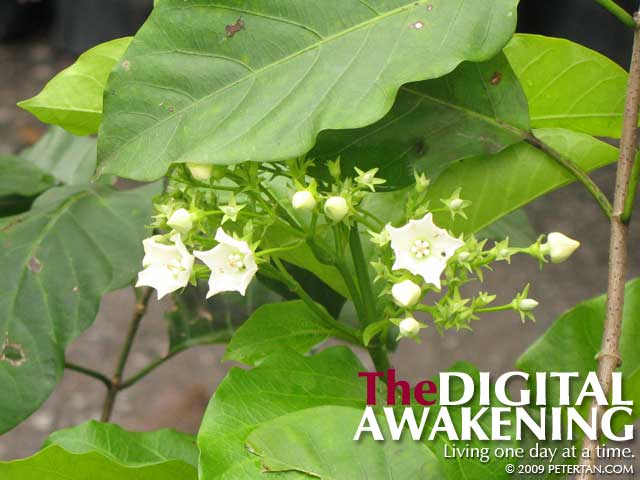
Bread flower – bunga kerak nasi – kesidang.
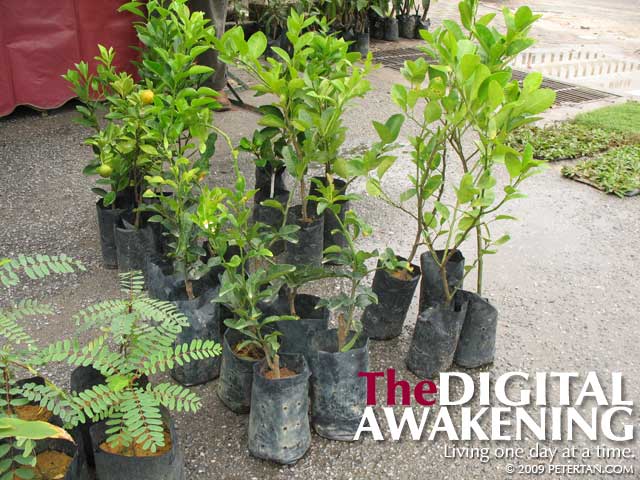
Various types of lime saplings.
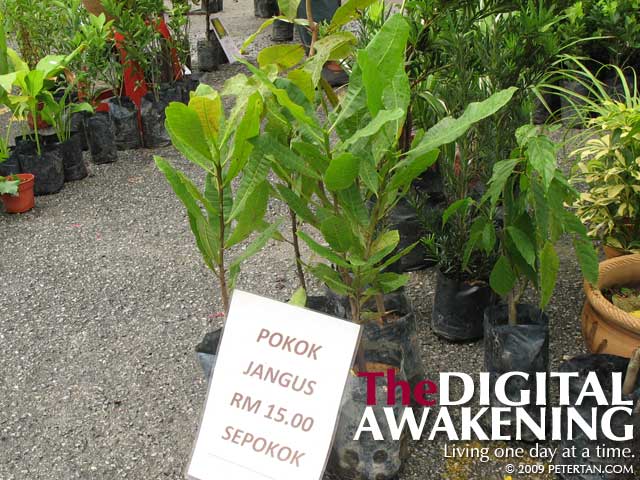
Cashew nut saplings – pokok janggus.
Tags: bread flower, bunga kenanga, bunga kerak nasi, bunga kesidang, cashew nut, cempaka, Chinese witch hazel, Ipoh City Stadium, Pasar Tani Ipoh, Pasar Tani Kg Simee, Pasar Tani Mega, pokok janggus, ylang ylang